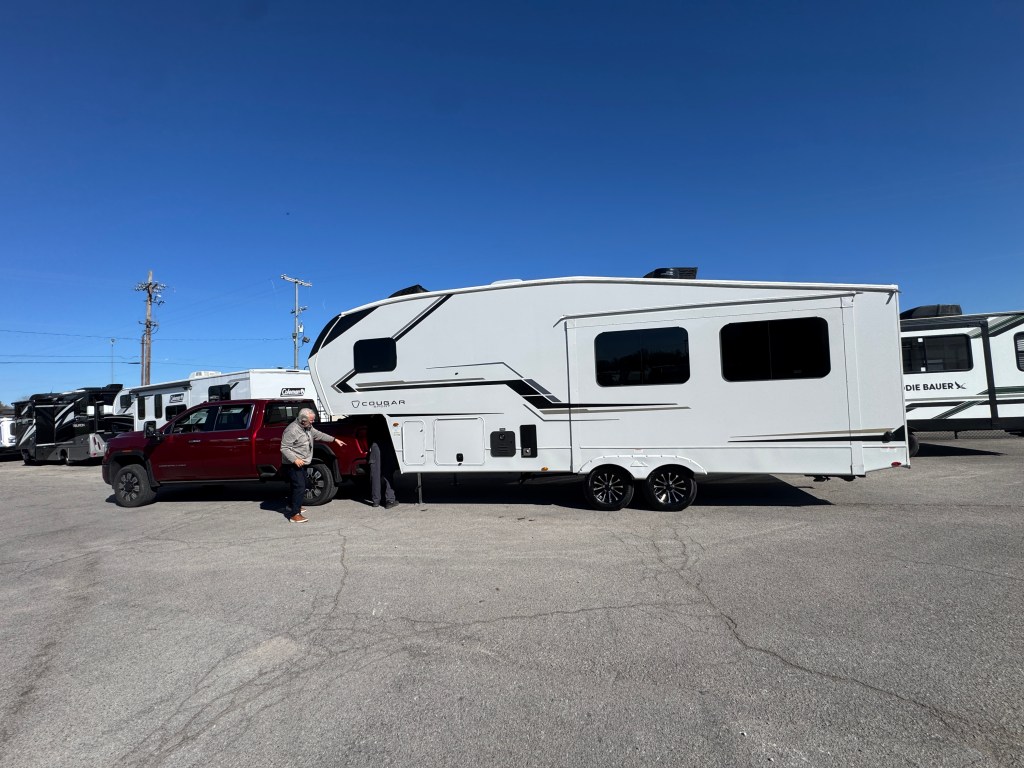
Fifth Wheel
We made it home and brought the RV to Camping World in Nashville for repairs. The two blowouts resulted in two separate deductibles of $1,000 each. To make matters worse, I made the rookie mistake of not winterizing the RV before dropping it off. Since it was February, Camping World wouldn’t accept any responsibility if the unit froze — so I ended up paying them to winterize it for another $150.
Lesson learned.
Lesson #6 – If you bring your RV in for service in the winter, ensure it is winterized first, or you will have to pay the service dealer to do the winterization.
While we were at it, I asked about the cost to repack the wheel bearings. Since we’d bought the unit used, I had no way of knowing whether it had ever been done when it was purchased and we had now put a couple of thousand miles on the trailer. Back when I was trailering my boat regularly, I made a habit of repacking the bearings about once a year. They quoted $350, I ran it by Wendy, and she told me to go for it since it was another job that would be added to my already long list otherwise.
The service technician mentioned that one of the most common causes of RV insurance claims and roadside breakdowns is neglected wheel bearings. The recommended maintenance interval is every 5,000 miles or six months, whichever comes first. Honestly, that seems a bit conservative — but after the tire ordeal we’d just been through, I wasn’t feeling particularly bold. There’s a tremendous amount of load on those bearings, and I intend to stick to that schedule going forward.
When we went to pick up the RV after the repair, Wendy had a new bee in her bonnet. She had just spent nearly a month living alongside me in that 26-foot unit, and it had given her time to think. She started looking at fifth wheels. I did not see it coming at first. One minute we were there to collect what we had, and the next we were walking through larger rigs, stepping up into raised living spaces, opening cabinets we did not yet own. Within two weeks, we had traded in our Cougar travel trailer for a fifth wheel that stretched a few feet longer and felt like an entirely different way to live.
Wendy was certain about it. Everything she had read pointed in the same direction. Fifth wheels, she said, were easier to tow, more stable, more forgiving on the road. I listened, but what pulled me in was something simpler. I wanted a place to sit. A real dinette. Somewhere we could play cards in the evening or eat dinner without balancing plates on our laps. Somewhere I could open my computer in the early morning, coffee in hand, and write without feeling folded in half.
That was enough for me. The truth was, I knew nothing about fifth wheels. I had never hauled anything but a trailer and adding the hitch to the middle of the truck seemed like the right move, even if I had never done it.
The first order of business was the hitch.
My Sierra came with a factory puck system, built for this exact purpose. It meant the hitch could be dropped in and locked down without drilling or modification. The complication was the bed length. It was a short box pickup, which meant tight turns could bring the front of the trailer too close to the cab. The solution was a slider hitch, something that would allow the connection point to move back when maneuvering in tight spaces.
Camping World quoted us sixteen hundred dollars for the new hitch, plus another five hundred for installation.
I could not justify paying that much for something the truck was already designed to accept. So I bought the hitch and installed it myself in the driveway. It turned out to be straightforward. The system fit together the way it was meant to, clean and solid, like it had been waiting there all along.
When we went to pick up the new camper, we braced ourselves for the kind of long, drawn-out day that always seems to come with a new major purchase. The kind where you sit, wait, sign, then wait again. They did not disappoint. We were passed from one person to the next, each step of the sale and trade-in handled by someone new, each conversation starting over from the beginning. It wore on us. By the time the paperwork was finished, it felt less like a purchase and more like something we had endured.
Still, we got it done. We hooked up and pulled the big bastard home.
The new unit stretched out to 29 feet 11 inches, just shy of thirty feet. On paper it did not sound like much more and it trailered on the highway no problem.
When we left Nashville, we drove from the Campers World feeder road located right alongside the Gaylord Hotel. As luck would have it, a cheerleader convention was in full swing that weekend, and pulling out of the side road onto the highway while hauling a brand-new thirty-foot trailer was next to impossible. After waiting for what felt like an eternity, I finally swung the rig into the turn and blocked traffic in both directions until enough cars had cleared to give us room to get moving. Let’s just say that more than a few of those cheerful young convention-goers shot me the bird or cursed profanities at us. Don’t think the convention was teaching manners.
When we got home, I lined up the RV to back into the driveway and decided to test the slider hitch. That was the whole point of having it. I pulled forward, set things up, and tried to slide it back into position.
It would not go.
The hitch refused to travel far enough to latch because the king pin holder made contact with the tailgate. The Sierra has a two-stage tailgate, so I dropped the upper section and managed to make the connection that way. It worked, technically. But standing there looking at it, I could not shake the feeling that it defeated the whole purpose of the slider in the first place.
I was not even sure I needed the slider. Maybe I did. Maybe I did not. I spent some time adjusting the setup, trying to find a position that made more sense, but nothing really changed. In the end, I was left with a system that worked, but not quite the way I had expected, and a suspicion that I would not know if it was right until I put a few miles behind us.
We had just finished unloading everything from the old RV, the one we had owned for all of eight months, stacking it into the garage in loose, uneven piles. Now we were hauling it all back out again, piece by piece, loading it into the new unit and trying to figure out where anything belonged. It felt like starting over, because it was. Different compartments, different layout, different logic to how things needed to be packed if they were going to stay put.
The part that bothered me most had nothing to do with storage.
I had just put the new tires on the old trailer. The Fourteen ply. Solid, dependable, one less thing to think about when you are rolling down the highway at speed with that much weight behind you. Now, just like that, I was back to ten ply tires again. Lighter, less margin, another variable in the back of my mind every time we pulled out onto the road.
I mentioned it to the service rep at Camping World while we were sorting through everything else. She told me her husband had done the same thing, upgraded to fourteen ply after the fact.
That settled it for me. I would run these for a year, get what life I could out of them, and then swap them out. One more upgrade, one more problem handled before it had a chance to become another highway breakdown issue.

 Books by Michael Klauke
Leave a comment